NVIDIA GEAR Sep. 2025 - Present

GRPO post-training

Connected complete robot attempts to shared GRPO policy updates.

A round plan sets tasks, contexts and configurable budgets for two collectors. Simulation collects grouped rollout windows. A physical robot waits for an operator Start and records complete attempts. An admission gate passes only valid, scored, version-matched and group-matched data to one shared GRPO learner with a single algorithm state, running from dataset to trainer. The learner publishes a versioned policy, and the next round starts after workers adopt it. The learner also saves and resumes from checkpoints that carry round and training statistics.

Collection-to-training integration
Technical details

Robot attempts vary in length and need consistent grouping for GRPO updates. I connected complete-attempt collection to the shared training core, with leave-one-out advantages, EMA baselines and per-task return normalization. Collection quotas, optimizer-step boundaries and algorithm state are saved for continuation.
Online and offline DAgger

Connected robot rollouts and human annotations to online and offline policy updates.

Schematic Rollouts Human input Policy
Technical details

I built components that turn robot rollouts and human annotations into training data for online and offline DAgger. Online workflows connect collection to policy updates; offline iterations aggregate demonstration and takeover trajectories. Quality-weighted training, controlled sampling and fixed-data replay support comparisons of training recipes, including lighting-consistency objectives.

Real-robot adaptation

Adapted learned policies to the data and execution interfaces of four robot platforms.

Galaxea R1 Pro product reference image
Galaxea R1 Pro
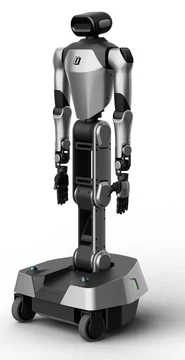
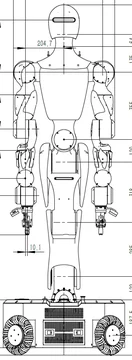
Spirit AI Moz1 front-view drawing from its hardware documentation
Spirit AI Moz1
AgiBot
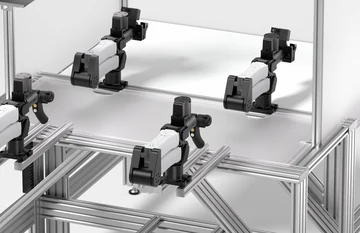
YAM arms in an I2RT teleoperation-station product reference image
YAM
Sensors Actions Data
Policy interface
Technical details

Different robots expose different camera, state and action conventions. I adapted policies for Galaxea R1 Pro, Spirit AI Moz1, AgiBot and YAM through observation mappings, gripper/action conversion, dataset interfaces and environment wrappers. I integrated training-time RTC policies with asynchronous execution: training uses a clean action prefix and suffix-only denoising loss; inference fixes the pending action prefix while generating the continuation.

Platform references: Galaxea · Spirit AI · I2RT

Previously Alibaba Group (2025): Multimodal AI. 01.AI (2023–2025): SDXL training; data curation and model training for Yi-VL.

DreamZero

World Action Models are Zero-shot Policies

DreamZero is a 14B world action model built on a pretrained video diffusion backbone.

Joint video–action prediction

Conceptual schematic

From what the robot sees, its state and an instruction, one model predicts how the scene will change and the actions that make it change, step for step.

instruction“Put the cube in the bowl”

robot statejoint angles, gripper

camera · now
One world action model shared backbone · joint denoising

Predicted together

video actions

  1. t+1

    closemovegripper
  2. t+2

    holdmovegripper
  3. t+3

    openmovegripper

execute actions → observe → repeat

Conceptual illustration, not a model rollout. Motion and gripper glyphs represent action outputs. Architecture · Real example.

Results reported by the paper7 Hz closed-loop control · >2× generalization over VLA baselines

Robustness of Learning from Task Instructions

In earlier language-model research, I studied how instruction-following models generalize when task instructions are paraphrased, manipulated or made more or less concise.

All publications on Google Scholar

Aug. 2021 - May 2023

University of Southern California

M.S. in Electrical and Computer Engineering (Machine Learning and Data Science)

Sep. 2017 - Jun. 2021

Xidian University

B.E. in Telecommunications Engineering

jiashengguwen@gmail.com